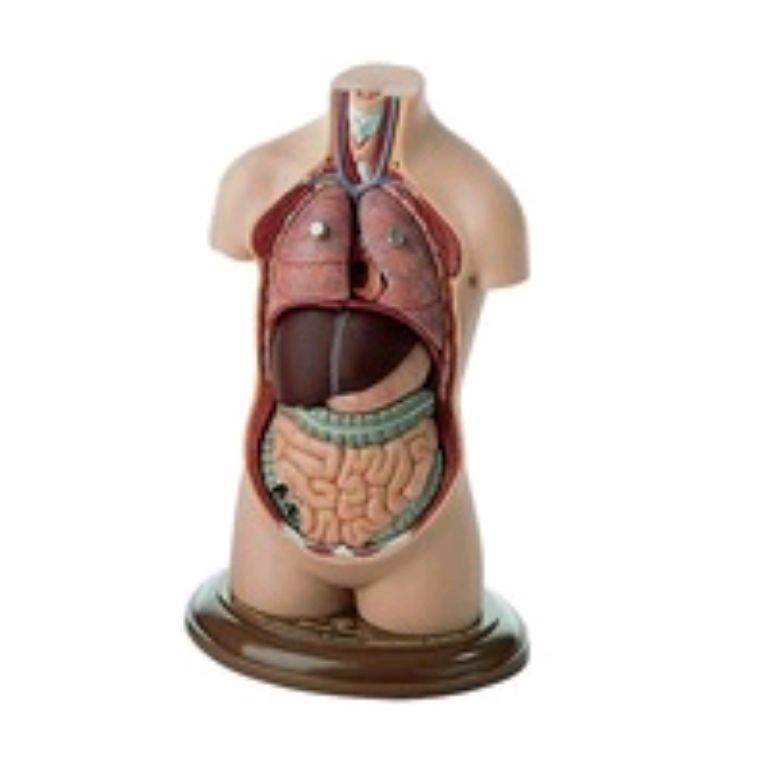
The torso, or trunk, is the central part of the body that contains the muscles that support the vital organs, move the limbs, and maintain posture.
Overview
Features:
- The muscular torso is made up of many muscles, including those in the chest, abdomen, and back. These muscles allow for movement, such as breathing, bending, and rotating the arms.
- Chest muscles
- Pectoralis major: A large muscle in the chest that's visible from the outside. It's responsible for bringing the arms closer to the body, as well as helping to move the shoulders and rotate the arms.
- Pectoralis minor: A thin, triangular muscle in the upper chest, located beneath the pectoralis major.
- Serratus anterior: A muscle in the chest that originates from the upper 8 or 9 ribs.
- Abdominal muscles
- Transverse abdominal muscle
- A muscle that crosses the abdomen horizontally, originating from the costal cartilages of ribs 7–12.
- Abdominal external oblique muscle
- A muscle in the anterolateral abdominal wall that originates from the fifth through twelfth ribs.
- Pyramidalis muscle
- A small, triangular muscle that originates from the pubis and attaches to the linea alba.
- Quadratus lumborum muscle
- A paired muscle in the left and right posterior abdominal wall.
- Other muscles
- Intercostal muscles: Muscles located around the ribs that help with breathing.
- Diaphragm: A dome-shaped muscle located between the upper chest and abdomen that helps with breathing.